Relance one of France's legendary producers

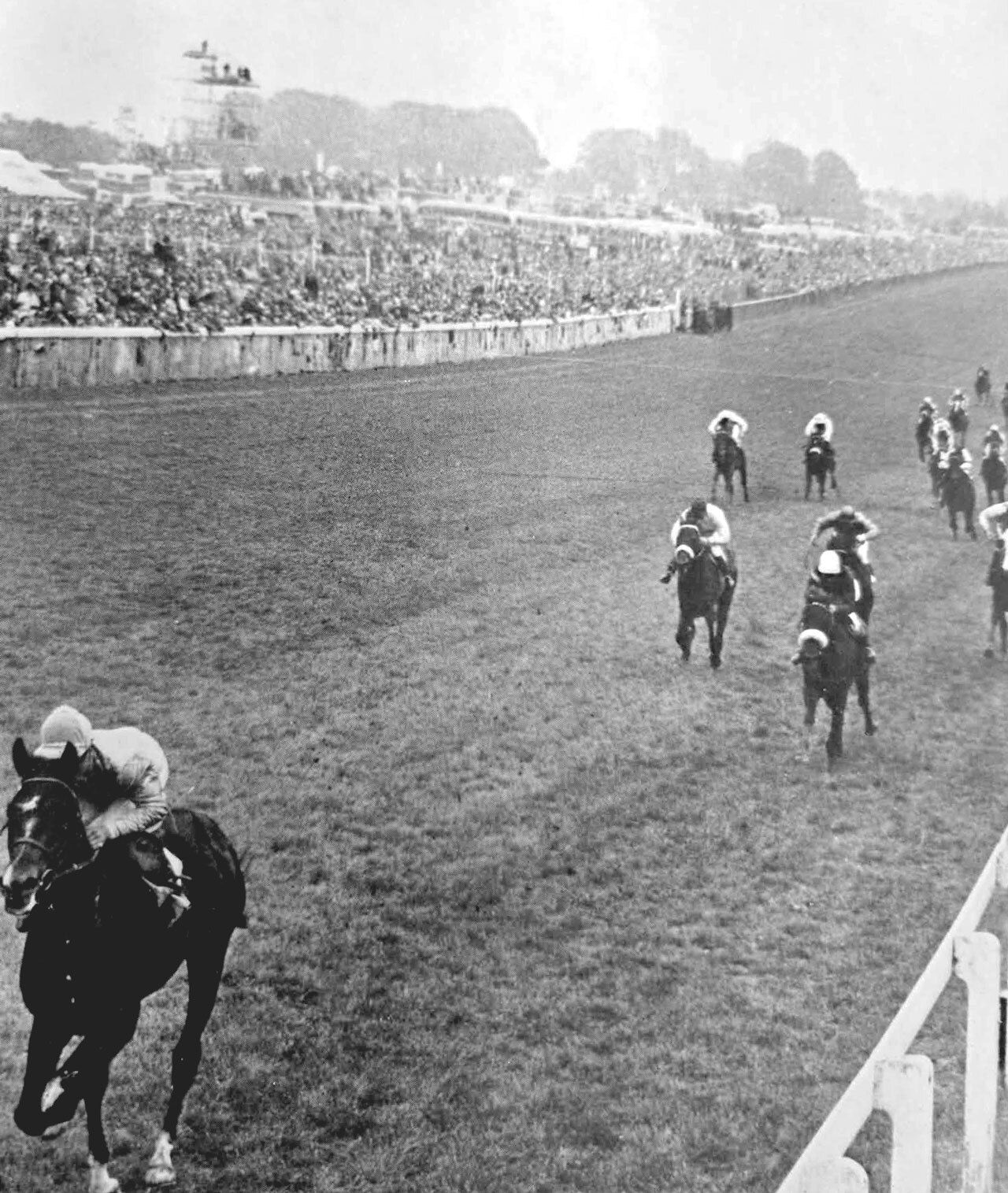
Relko wins the 1963 Epsom Derby (The British Racehorse)
While at Saint-Cloud Racecourse for its eponymous Grand Prix in early July, I was drawn to a display showcasing the famed event’s winners that stretched across the walls of the grandstand’s ground floor. One four-year period that caught the eye was 1962-65, an era that yielded not only a remarkable string of victors but also an exceptional streak of success for one broodmare.
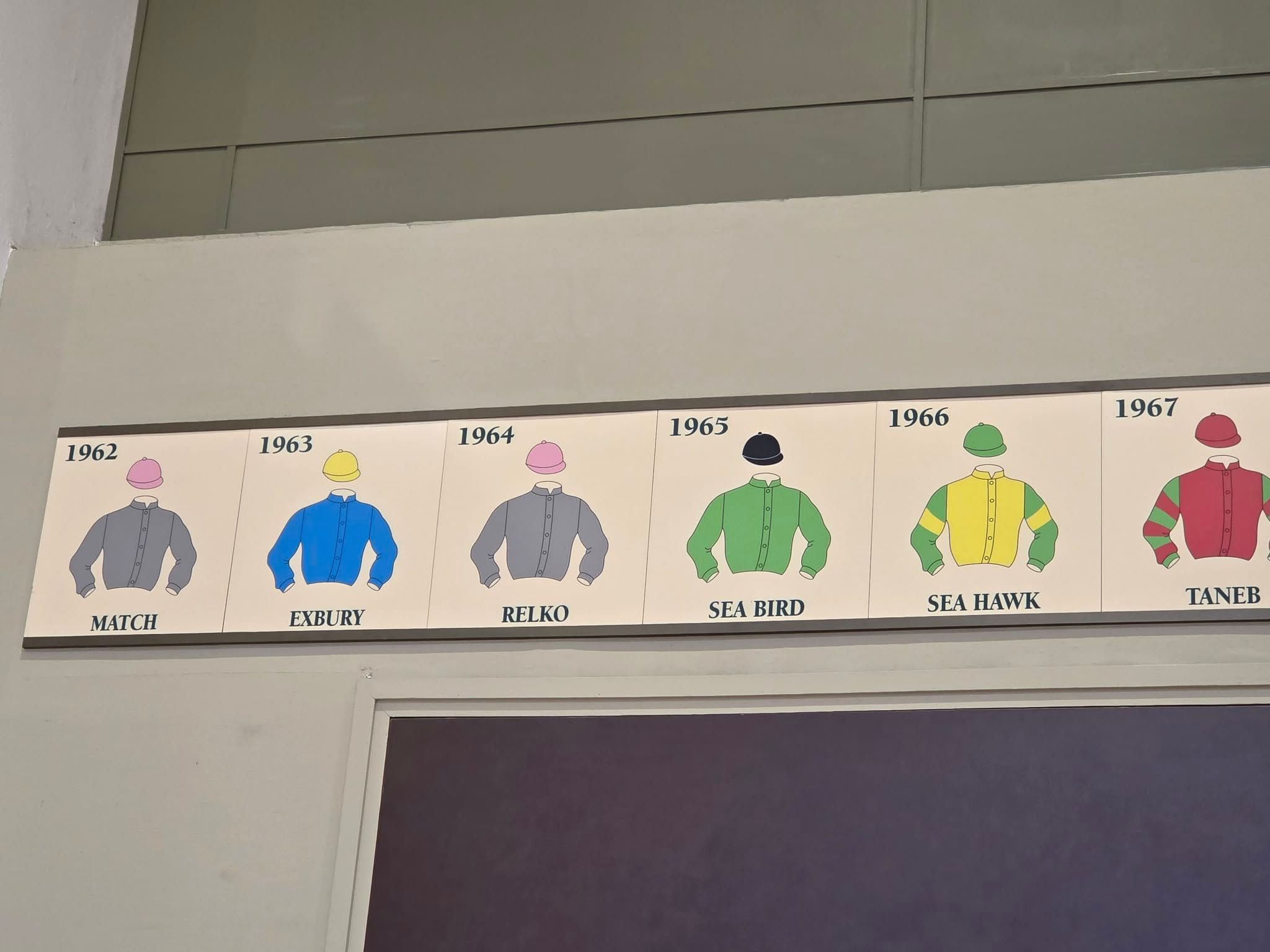
Francois Dupre, a famed Parisian hotelier, was one of France’s most prolific owner-breeders in the years after World War II. Not only did he routinely win France’s great races, but sometimes England’s as well.
Tantieme was an early standout for Dupre, winning the French 2000 Guineas and two editions of the Prix de l’Arc de Triomphe. Tanerko, a son of Tantieme, won back-to-back renewals of the Grand Prix de Saint-Cloud. Both father and son would play a role in Dupre’s amazing success with the broodmare Relance.
An English-bred daughter of the American-bred Relic, who had won the Hopeful S. at Saratoga, Relance was only a minor stakes winner herself. But bred several times each to Tantieme and Tanerko, Relance would produce a trio of outstanding colts in virtual succession.
The first of these was the Tantieme colt Match, who earned the designation of *Match II in U.S. pedigree records upon his importation to America. Match proved one of France’s top three-year-olds in 1961, winning the Prix Royal-Oak (French St Leger) with seconds in the Prix du Jockey-Club (French Derby) and Grand Prix de Paris. At season’s end, Match finished fifth to the Italian colt Molvedo in the Arc.
At four, Match became an international star, but not before turning in a couple of sub-par efforts, perhaps the result of an undisclosed breathing issue. Equipped with a tongue tie, Match bounced back in the Grand Prix de Saint-Cloud, scoring by 1 1/2 lengths over the three-year-old Exbury, who would capture the Grand Prix de Saint-Cloud and Arc the following season.
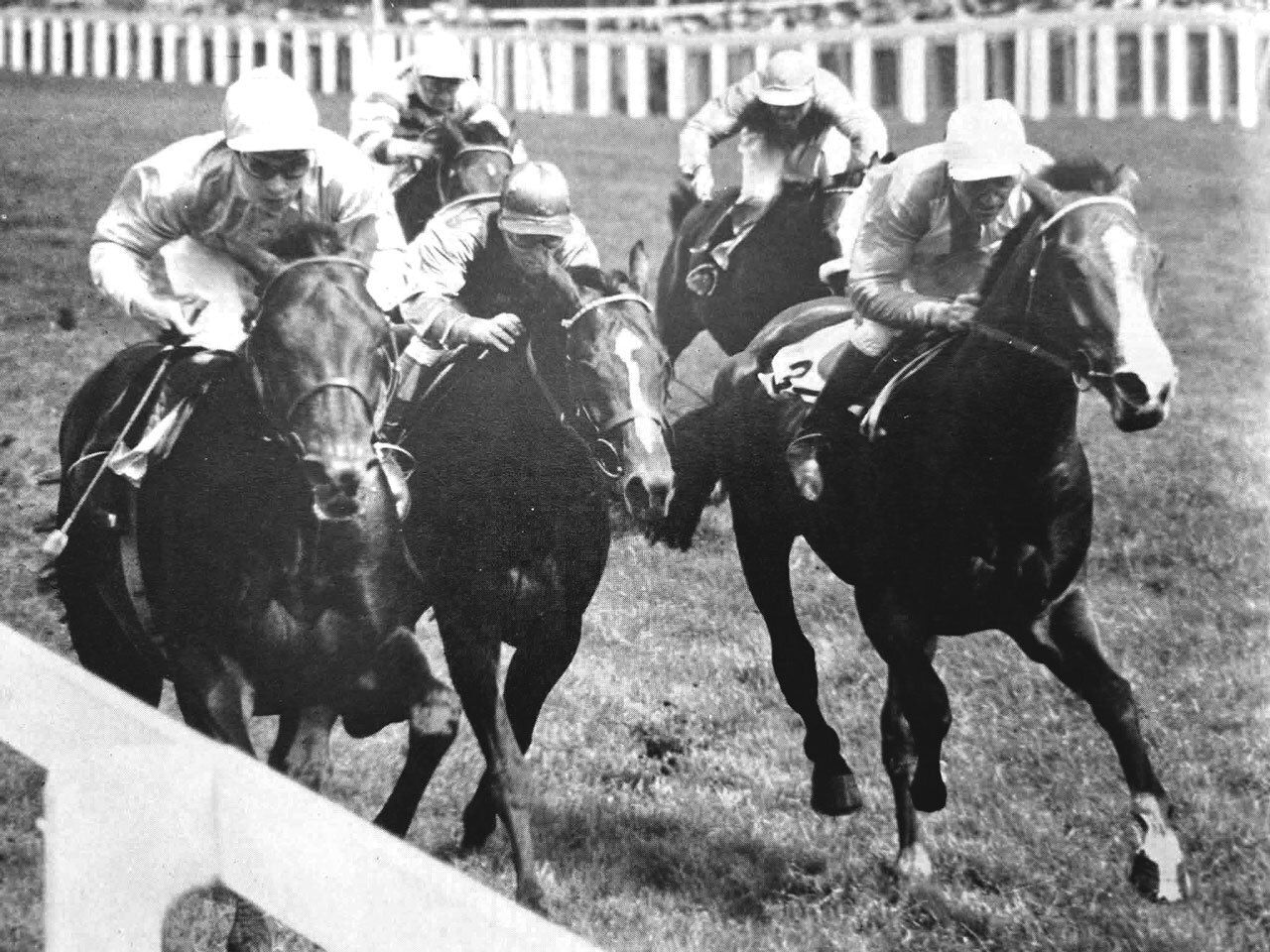
Match wins the 1962 King George VI and Queen Elizabeth (The British Racehorse)
Match subsequently invaded England, winning the King George VI and Queen Elizabeth S. at Ascot over classic winners Aurelius, Arctic Storm, and Val de Loir. But in his second attempt at the Arc in October, Match again finished fifth, though he was the first older horse to finish and only a length behind longshot winner Soltikoff.
Match’s connections next accepted an invitation to compete in the Washington D.C. International at Laurel. Billed as a showdown between two-time Horse of the Year Kelso and Beau Purple, who had beaten Kelso in the Man o’ War S., the International also featured 1961 Kentucky Derby and Preakness winner Carry Back. Match was sent off as the 6-1 fourth choice.
Beau Purple, who with a victory would have dethroned Kelso as Horse of the Year, was dueled into submission by Kelso after seven furlongs. But Kelso didn’t leave enough in the tank to repel Match, who produced an explosive kick up the inside to win going away by 1 1/2 lengths under Yves Saint-Martin.
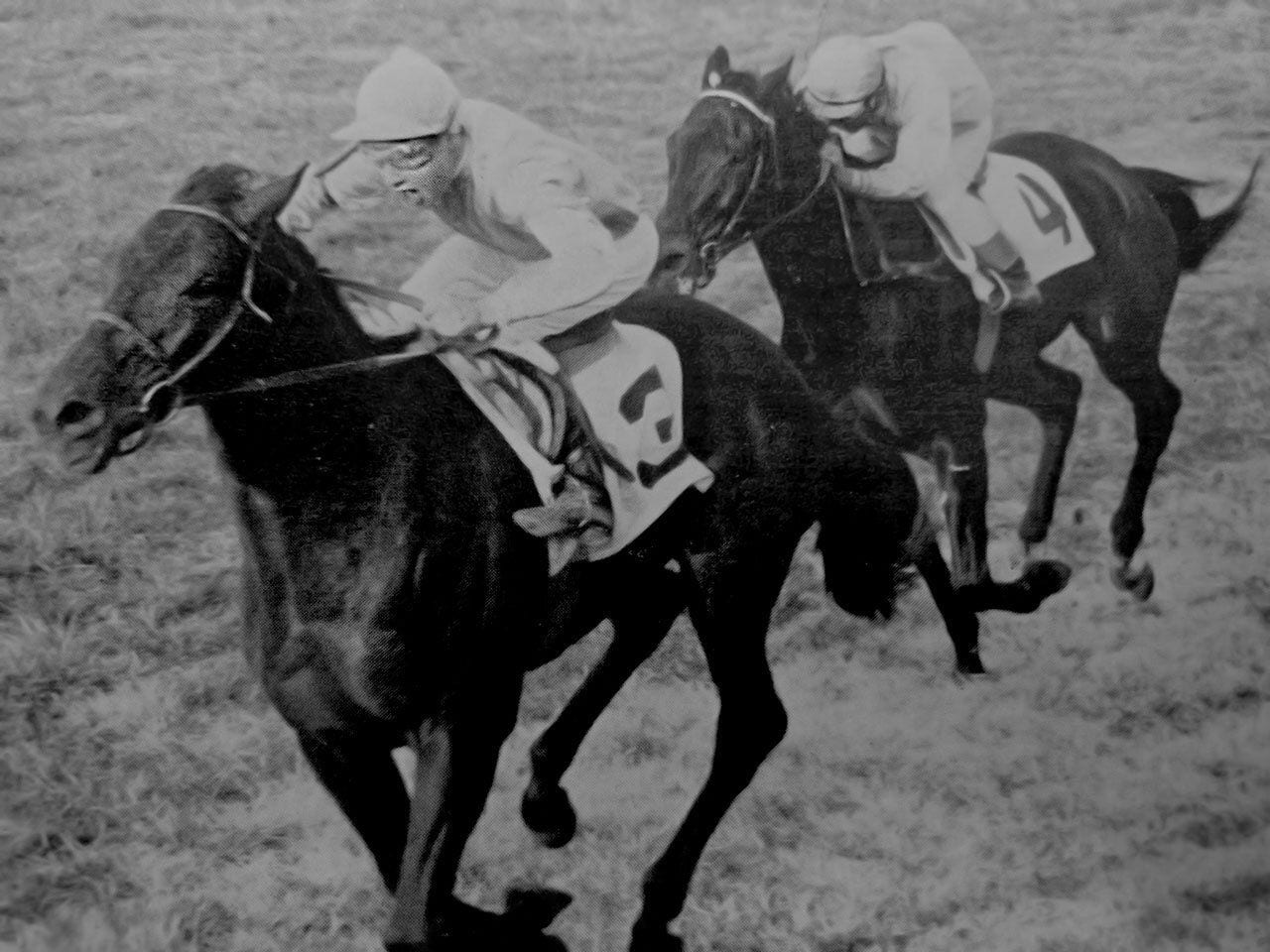
Match beats Kelso in 1962 Washington D.C. International (The British Racehorse)
Match, who received a Timeform rating of 135 for the season, carried 128 pounds in the International as Saint-Martin failed to make the 126-pound assignment. Thus, Match won while giving two pounds to Kelso and others. Accepting the International trophy for Dupre and trainer Francois Mathet was Miguel Clement, the father of recently inducted Hall of Fame trainer Christophe Clement.
While Match was achieving worldwide acclaim, his three-quarter brother Relko, by Tanerko, was completing a slightly underachieving juvenile campaign. After impressively winning his first two starts, Relko finished third in the Criterium de Maisons-Laffitte, fourth in the Grand Criterium, and second in the Prix Thomas Bryon.
As a three-year-old, Relko was a far more dominant figure on both sides of the Channel. Comfortably winning the nine-furlong Prix de Guiche by three lengths on his seasonal reappearance, Relko dropped back to a mile three weeks later to claim the French 2000 Guineas by 2 1/2 lengths.
Relko started as the 5-1 favorite in a field of 26 for the Epsom Derby and turned the race into a procession, winning by six lengths over a field that included Ragusa, who later claimed the Irish Sweeps Derby, King George VI and Queen Elizabeth, and St Leger. Farther up the course was Iron Peg, who would beat Kelso in the 1964 Suburban H. at Aqueduct.
Relko’s sophomore campaign was not without controversy. A urine sample taken from Relko after the Derby produced a positive test for an undetermined substance, though in an amount so small that medical experts agreed it could not have proved an effective stimulant. It was not until the fall that the case was thoroughly adjudicated by the Jockey Club in Relko’s favor, though not before months of sensational headlines.
Adding to suspicions that Relko was possibly doped at Epsom was his shocking withdrawal from the Irish Sweeps Derby. An odds-on favorite, Relko went lame on his way to post and was forced to scratch.
Freshened until autumn, Relko reappeared in the Prix Royal-Oak, winning for fun by three lengths. Expectations were similarly high in the Arc, in which Relko started as the 9-10 favorite, but the aforementioned older horse Exbury proved the best in all of Europe while Relko settled for fifth.
Rated at 136 by Timeform, Relko earned a similar rating after an abbreviated campaign in 1964. He captured the Prix Ganay, struggled to eke out a victory in a return trip to Epsom in the Coronation Cup, but then landed the Grand Prix de Saint-Cloud with tremendous ease. A tendon injury ended his career before the Arc.
Relance’s third outstanding colt, Match’s full brother Reliance, earned a 137 Timeform rating for his one and only season of racing. While that would normally have been good enough to be acclaimed the best horse in Europe, Reliance was unlucky to be a three-year-old in 1965, a season dominated by a twice-in-a-century talent like Sea-Bird.
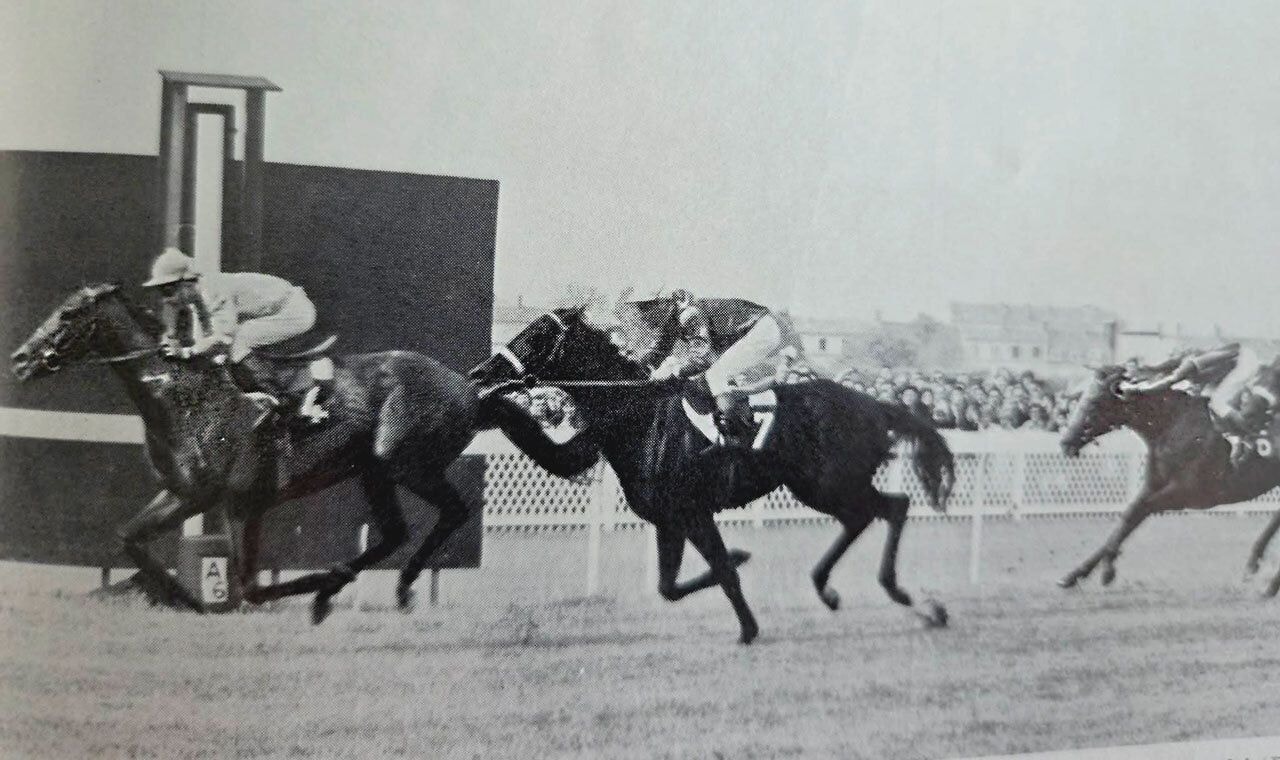
Reliance wins the 1965 Prix du Jockey-Club (The British Racehorse)
While Sea-Bird won the Epsom Derby in a canter and pummeled older rivals in the Grand Prix de Saint-Cloud, Reliance was cleaning up in France’s major stakes for three-year-olds, claiming the Prix Hocquart, Prix du Jockey-Club, Grand Prix de Paris, and Prix Royal-Oak.
Reliance suffered his lone defeat in the Arc. Sea-Bird, who earned a 145 Timeform rating for the season, won by six lengths while Reliance finished second, five lengths ahead of Diatome, another France-based colt who went on to capture the Washington D.C. International.
Although Relance never produced another runner on par with the likes of Match, Relko, and Reliance, that triumvirate puts her in a revered place in the annals of Thoroughbred producers.

Authors


Categories
FEATURED PRODUCTS
Daily Selections
Full racecard analysis/expert picks for major tracks from America's top handicappers.
Buy Nowe-ponies Picks
E-Ponies computer-based figures have been around since 1997. Using an algorithm written by the business owner and handicapper, Liam Durbin, and powered by BRIS data files, E-Ponies offers a unique, fact-based, dispassionate analysis of every horse in every race, assigning scores for speed, class, form, connections, and more. Forget which jockey owes you money! What does the data say!
Buy NowBruno With the Works
Bruno De Julio & team bring 30+ yrs experience observing racehorses to Brisnet with valuable insight into their morning routines & chances for success in the afternoons.
Buy NowValue Plays AI by Predicteform
Full race card program with easy-to-use win chances and contender classifications for every runner plus analysis of the Best Bet, Live Longshot, and Wagering Suggestions for every race.
Buy NowADVERTISEMENT