Handicapping Feature

HANDICAPPING FEATURE
SEPTEMBER 12, 2007
The Summer of '07: Is the Past a Prologue?
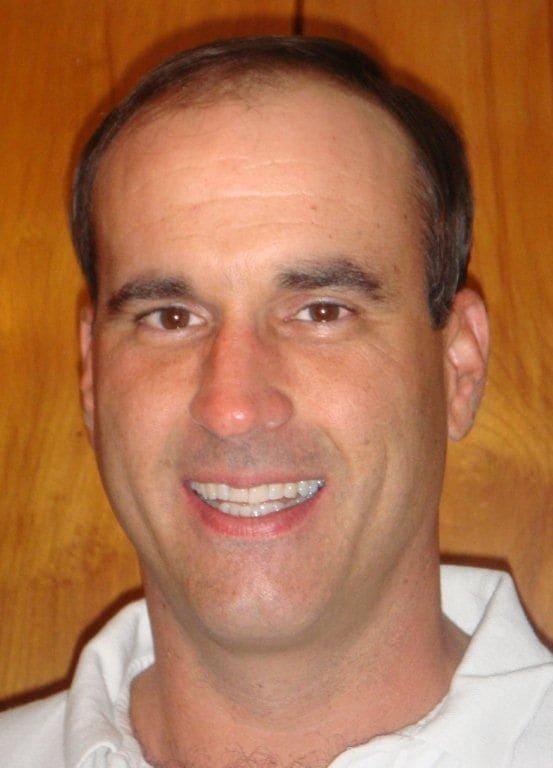
by Steve Zacks
With Saratoga and Del Mar now history, we take a look back with a view to the
future. Compliments are paid; questions are asked.
A horseplayer's evaluation of the new Del Mar Polytrack will take weeks. If
horses who worked well but didn't run well in the afternoon perform well at
other venues, players who liken the move from the Del Mar Poly-to-dirt or Del
Mar Poly-to-Cushion Track as a turf-to-dirt move might find great opportunities.
Several Del Mar-trained have run already run lights-out performances at
Saratoga, and some horses who excelled at Hollywood Park didn't carry their form
forward at Del Mar.
We had some success at Del Mar favoring sustained type runners -- those with
final BRIS Speed and Late Pace numbers higher than their Early Pace ratings.
This may not be so much a positional play as an energy play. A patient ride,
either in front or from behind, seemed to be the winning way. Pay attention to a
horse with good form prior to Del Mar; be prepared to toss out the
less-than-stellar performances there until trends clarify. Playing more than one
horse in uncertain situations often leads to rewards, and regular trips to the
cashier's window will keep you in a positive mindset. For those who focus on
trainers, always be wary of trainers coming off particularly strong or weak
meetings, especially if you had anticipated better (or worse); form reversals
are common under these circumstances.
Saratoga had one of its best meetings in recent years. The weather was great.
The absence of major summer storm bursts led to plenty of turf racing with full
fields. One real positive was the adjustments made at the starting gate; the
fact that, other than an unfortunate event on closing day, the improvement was
noticeable is significant. At the very least, horseplayers were given a fair
shake and when racing does anything positive for the horseplayers, it deserves
to be patted on the back.
Small field sizes in major stakes continues to trouble racing. It is not very
often that a deep closer has a chance to win a four-horse race, but it happened
in the Hopeful S. (G1) when MAJESTIC WARRIOR (A.P. Indy) was able to roll on by
the better-backed speedsters in the stretch. In a four-horse field, 6-1 is a
great price and leading trainer Bill Mott was not likely to be running a
two-year-old maiden winner in a Grade 1 event unless he was very serious! Clever
handicappers got a great overlay there.
In the Spinaway S. (G1), MORE HAPPY (Vindication), the beneficiary of a gate
mishap in her Adirondack (G2) victory, was unable to sustain her speed at the
longer distance and did not finish on the board. To her credit, she was
returning on rather short rest off a hard effort. The hot horse was second-time
starter IRISH SMOKE (Smoke Glacken), and she was the first two-year-old this
season to win a Grade 1 in his/her second career start. So much for the old days
when stakes and racing experience was a necessity to win the big juvenile events
of the summer.
Those who stay on top of hot trainers and jockeys were rewarded with a
resurgent Mott winning all kinds of races, including almost a dozen two-year-old
events. Could he be a force in the sophomore classics of 2008? Give him a horse
with talent and some time, and he will find a way to bring that talent to the
fore! Gary Contessa lit up the tote board several times during the closing days.
These included a winner absent for more than a year and a developing sophomore.
Those who pay attention to the work tab, found adequate clues with the different
styles of preparation for each. Linda Rice had ample opportunity to take
advantage of her known strength, winning a slew of turf events in the closing
days.
It became apparent early in the meeting that Todd Pletcher's horses were not
winning the stretch battles the way so often do. That provided one clue for the
skeptics. After the slow start, those who chose to play against the usual meet
leader were able to take advantage by playing against many short-priced horses.
Many of these were merely players in contentious races. When the barn was hot
they would beat you time and again; this year they proved to be beatable. Very
often when a good stable has a slow meet, they are dynamite in the following
one. Along with Pletcher, Steve Asmussen is another that bears watching early in
the upcoming Belmont Fall Championship meet, and at Keeneland later on. Watch
the early trend carefully and have a strategy in place to take advantage -- be
they hot or be they not!
Carl Nafzger had a brilliant plan and equally successful execution with his
top sophomores STREET SENSE (Street Cry) and LADY JOANNE (Orientate). Students
of form and preparation would do well to study this master of bringing a horse
up to a big race. In our book, his performance was akin to Dick Mandella's four
victories in the Breeders' Cup of 2003.
What the future holds for a couple of the meet's top name horses will unfold
over the next months. LAWYER RON (Langfuhr) was dominant in winning both the
Whitney (G1) and Woodward (G1). He's always been a top performer, but a skeptic
might ask if he is one of those Saratoga horse-for-course freaks. Will he run as
well at Monmouth at 10 furlongs in the Breeders' Cup Classic (G1)? His
performance in the Woodward was markedly inferior to that in the Whitney off a
similar set up. Did the extra eight pounds make that much of a difference? Not
that he would get paid any more for winning by more lengths than he did, but he
did not gallop out nearly as well last time either. A contrarian position might
prove rewarding in an upcoming race.
The skeptics had much to say about the performances of Street Sense; he won
both his prep race (Jim Dandy [G2]) and his main target (Travers [G1]), though
not necessarily in the convincing fashion that many expected.
Some race horses, with experience, become very professional and understand
fully just what they have to do. Perhaps he is one of those.
Race horses are athletes. Most athletes have problems. There is no doubt that
Street Sense is an athlete. He may now have his physical limitations. Perhaps
CURLIN (Smart Strike) did not win the Preakness (G1) so much as Street Sense
lost it because these limitations came to the fore after making that long
extended run to the front. It is also possible that Street Sense did not really
care for the Saratoga surface (just as Lawyer Ron might have relished it), but
was a good enough to win in spite of it. Perhaps the stress of racing has caught
up with him somewhat and he is not quite the horse he was earlier. These days,
so it seems, the modern race horse only has a few good efforts in it.
And of course we do not yet know just how good a racehorse the
later-developing GRASSHOPPER (Dixie Union) will turn out to be. If the new trend
is for maiden winners to win the meeting's marquee two-year-old events, then why
shouldn't an upstart three-year-old give the division leader a run for his
money? He could be one to watch.
On the subject of safety and racing, and the artificial versus the dirt
surface debate, a quick review of the charts for Arlington Park, Del Mar,
Saratoga and Monmouth Park over the same period suggests that there were as many
or more DNFs (did not finish), pull-ups and vanned offs, on Poly as on dirt. The
quality or thoroughness of the pre-race soundness/veterinary examinations may
have something to do with what happens on the race track in the afternoons. The
important factor needs to be a part of this discussion. To date, we have not
seen this point publicly referenced.
Having been hands-on with race horses for over two decades and having watched
racing for more than four, we believe that in all but the rarest of cases, a
properly trained horse will respond to sparing use of the whip. Once they have
been taught what is expected of them, many need only to be shown the stick, or
tapped lightly once or occasionally to keep their mind on the task at hand. We
have lobbied in the past for tighter controls in use, misuse and abuse of the
whip.
We have watched Russell Baze ride in several thousand races over the years
and rarely if ever do we recall him misusing or overusing the whip. Baze, and
other top riders like him, win a lot of races because they are on good horses,
understand what saving ground is about, are aware of pace and have a tactical
understanding of a race. There is no doubt in our mind that Baze rates with the
best of this group. To his credit, he is also a fierce competitor and does
everything he can to win. He has also been seen not to persevere unnecessarily
with other challenged or well-beaten runners. Those are some of the many
ingredients which go into the making of the winningest rider in North American
racing history.
We watched the race in question when Baze's horse broke down in deep stretch.
We saw the horse go bad and then seem to collect himself. In the shadow of the
wire and wanting to win a race, Baze hit the horse a couple of times. The
unfortunate outcome is a sad fact of horse racing. We are not sure that Baze
deserved the suspension, but that is not our place. He has abided by the ruling
as a true professional and gentleman. However, what is sad and what deserves
comment is that he is penalized for a possible small lapse in judgment during
the heat of competition while countless offenses of misuse, overuse and abuse of
the whip go on across North America on a regular basis.
Our hats go off daily to the riders who draw the sword only when necessary
and hand ride their horses or who use the whip most judiciously -- Edgar Prado,
Richard "the Mig" Migliore and Johnny Velazquez are a few of many. We applaud
every time we see it. It is too bad that the common everyday abuses go
unpunished and too many riders continue to do it repeatedly. More of the public
needs to complain to the stewards and racetracks when they see a horse five or
six lengths in front of the field being hit in the belly on every stride with
the rider not evening looking back to see if there is any competition!


Authors


Categories
FEATURED PRODUCTS
Daily Selections
Full racecard analysis/expert picks for major tracks from America's top handicappers.
Buy Nowe-ponies Picks
E-Ponies computer-based figures have been around since 1997. Using an algorithm written by the business owner and handicapper, Liam Durbin, and powered by BRIS data files, E-Ponies offers a unique, fact-based, dispassionate analysis of every horse in every race, assigning scores for speed, class, form, connections, and more. Forget which jockey owes you money! What does the data say!
Buy NowBruno With the Works
Bruno De Julio & team bring 30+ yrs experience observing racehorses to Brisnet with valuable insight into their morning routines & chances for success in the afternoons.
Buy NowValue Plays AI by Predicteform
Full race card program with easy-to-use win chances and contender classifications for every runner plus analysis of the Best Bet, Live Longshot, and Wagering Suggestions for every race.
Buy NowADVERTISEMENT